Physical Address
304 North Cardinal St.
Dorchester Center, MA 02124
Physical Address
304 North Cardinal St.
Dorchester Center, MA 02124

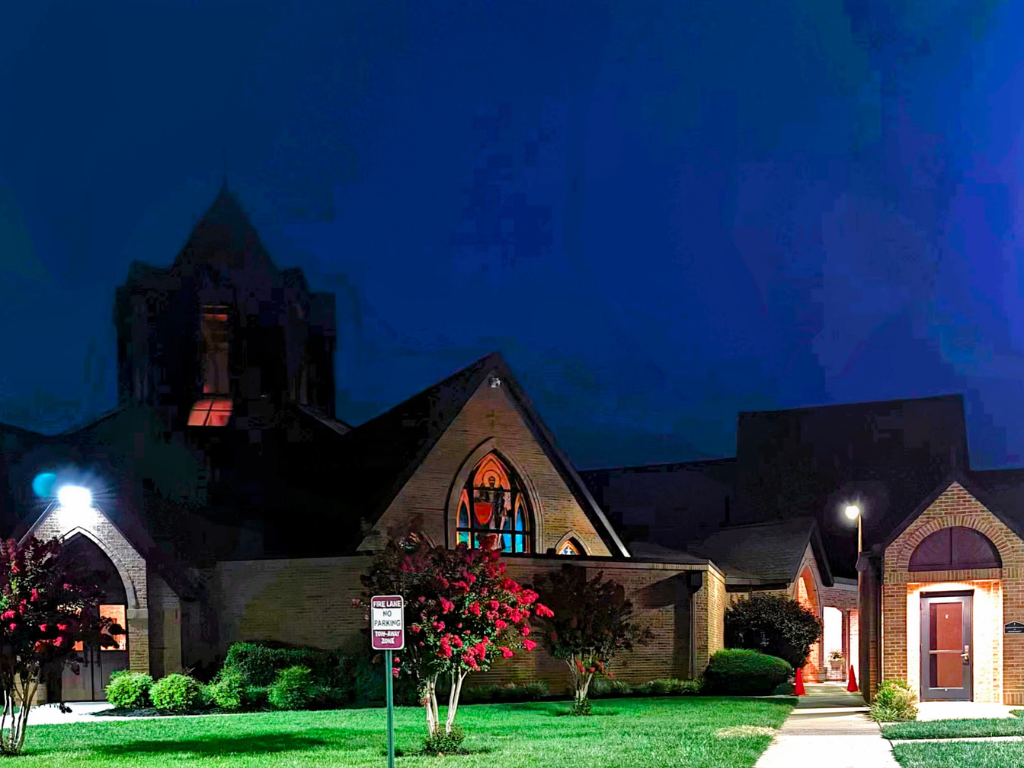
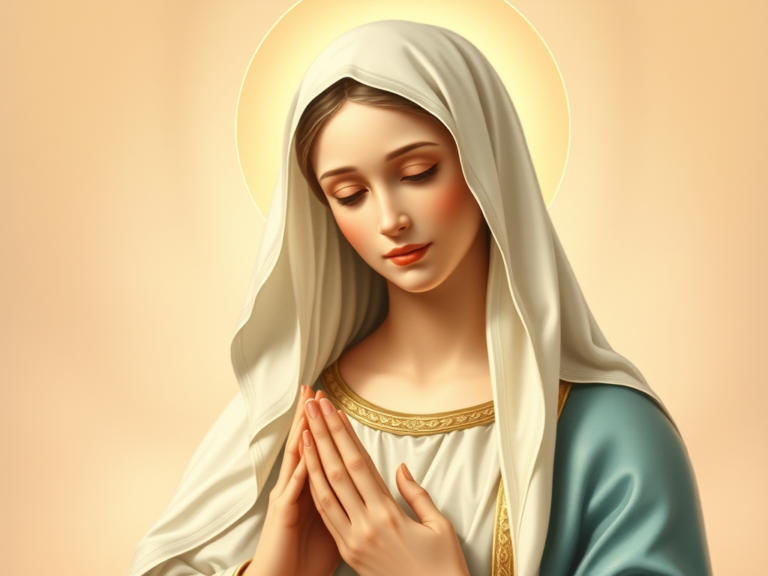
Before delving into the reason that made me say why Mary is called the Immaculate Conception I’d like to honor first our Blessed Mother on her birthday.
On September 8 – we will celebrate the birthday of Mary, conceived without sin.
Mary was conceived without sin, hence she is called the Immaculate Conception.
Many people may have, however, mistakenly think that the Immaculate Conception refers to the conception of Jesus Christ in the womb of Mary.
This article will clear that misunderstanding.
Mary is the Immaculate Conception.
What does that mean?
It means that from the very first moment of her conception in the womb of her mother, Anne, Mary didn’t have the stain of original sin.
The book Poem of the Man-God disclosed that the Father, as the Creator of all Creations, on the sixth day of Creation, had a real, worthy daughter fashioned to His perfect image.
That daughter is Mary.
God impressed so completely and exactly the mark of His image on Mary.
Mary, in turn, has preserved that perfection.
While Eve, who lived in a pure, perfect world said No to God’s command thus falling into sin; Mary, who lived in an imperfect, sinful world said Yes to God, and preserved her sinless, pure and holy nature.
In addition, God applied to Mary the saving grace of Jesus Christ on the Cross in a unique and extraordinary way – from the very beginning of her conception.
Like all of us, Mary was saved by Jesus Christ. But Mary’s salvation happened to her at the time of her conception. And so, from her very birth, she never had the stain of original sin.
What this means is that Mary doesn’t have the fallen nature like all of us have.
She will never fall. She will never strive for holiness and purity to become pleasing to God, because she is already perfectly holy and pure naturally.
As for us – our fallen nature has made us susceptible to committing sin continuously. We struggle in fighting temptations, we struggle to become holy and pure. We desperately need the grace of God to achieve holiness in ourselves.
But Mary has already been endowed with the fullness of God’s grace. Holiness, purity, righteousness has been her true nature. And she hasn’t depart from such, hence she became the Woman who can bring the Son of God into the world.
God’s plan for the salvation of mankind involves becoming human. That means he must come into the world by birth. But God can only live in a pure, sinless dwelling place. God found that in the spotless womb of Mary.
And so, from the beginning Mary was destined to become the Mother of God.
God prepared Mary for a mission unlike any other: to carry the Son, Jesus Christ, in her womb, to give birth to Him, to care for Him, and to walk with Him throughout His life.
From the very beginning God created Mary pure, holy, and sinless so that the Son of God who will come down to earth to redeem man from the bondage of sin and of Satan can have a holy dwelling place suitable to the holy One who was to come.
The Protoevangelium of James looks to be not divinely-inspired. But being not divinely-inspired doesn’t mean the text written were all false.
In fact it carried information that explains Mary’s Immaculate Conception.
The protoevangelium spoke about Mary’s parents, Anne and Joachim. They had been childless.
Their childlessness took the attention, and most probably the ire, of the temple leaders, the rightesous Jewish priests and pharisees, who consider childlessness as God’s punishment for sinners.
Mary’s father, Joachim, faithfully brings offering to the temple, despite the elders aloofness towards him, whom they accuesed of being a sinner.
The situation worsened for Joachim when again he brought his offerings before God along with the sons of Israel. But a pharisee by the name Rubim came to him saying: It is not meet for you first to bring your offerings, because you have not made seed in Israel.
Joachim was grieved exceedingly, and did not come home. Instead, he ran away to the mountains.
The pharisees wouldn’t accept the offerings of Mary’s father, Joachim, even though he gives them the best offerings, because they looked down on him for being childless, and thus considered him a sinner.
For six months, Joachim didn’t come home. Mary’s mother, Anne, mourned thinking he had died. She not only mourned for being barren, unable to conceive a child, she also mourned for becoming a widow.
But during a festival in Jerusalem, when Anne and several relatives encamped around the temple in Jerusalem for the celebratiom, Joachim came down, having been encouraged by an angel who appeared to him, and told him he would have a child.
Yet, by that time, and unknown to them, Anne was carrying the child, Mary, in her womb.
From this account in the protoevangelium, Mary’s conception, may have therefore happen without the marital relationship of her parents. She was conceived during the time that his father, Joachim, was in the mountains for six months grieving his and Anne’s childlessness.
The protoevangelium of James may have then tell exactly why Mary is called the Immaculate Conception. Mary was conceived supernaturally, that is, without the participation of a man and a woman, hence she is called the Immaculate Conception.
Just like Jesus who was conceived without any man’s participation, Mary too was conceived the same way.